Opera Singer Olivia Kellett: Voice Lessons Teach Life Skills, Not Just Music
Jan 25, 2026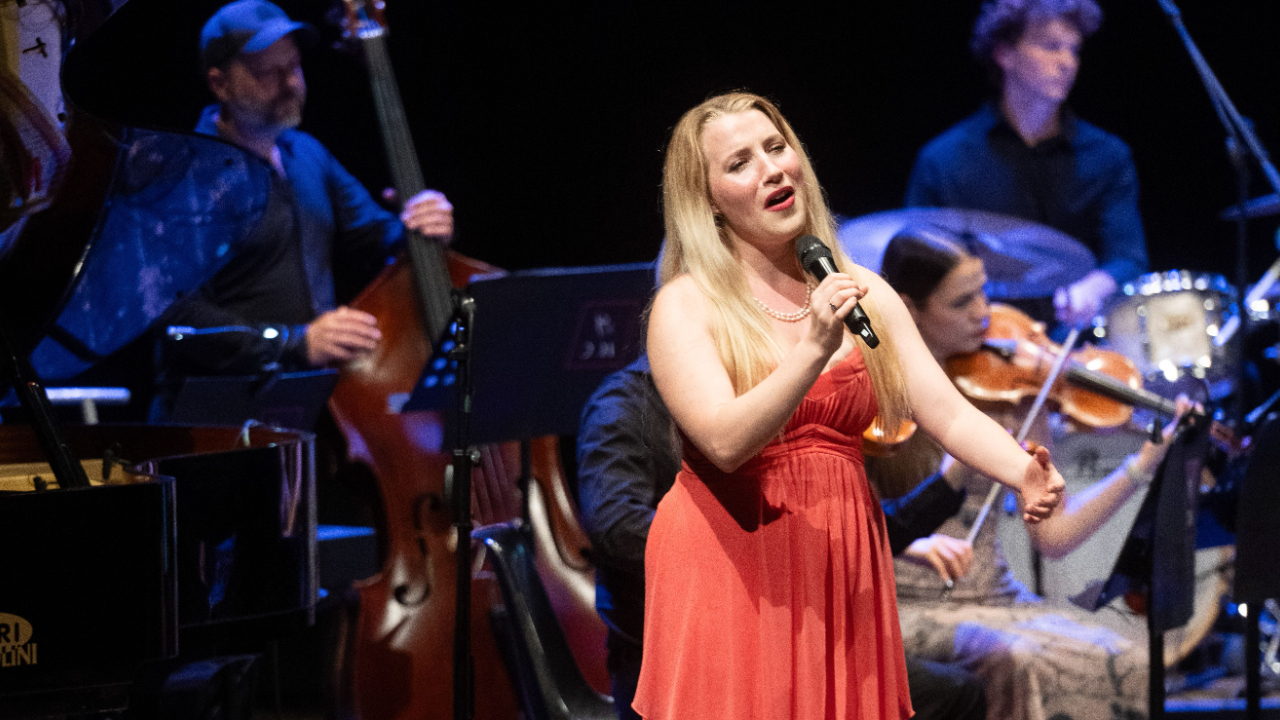
“I wish that people thought about singing lessons a little bit more like they thought about public speaking skills,” Olivia Kellett says. “Something that can be really, really fundamental to your child's self-esteem and your child's ability to exist in public, exist in discomfort, and express themselves in a way that helps them emotionally and socially and professionally.”
Parents don't often consider voice lessons unless their child shows obvious talent or a strong desire to sing, yet they'll happily enroll a reluctant child in piano "because it's good for them." Olivia thinks voice deserves the same consideration. Just as piano helps children learn to read, singing teaches them how to communicate, stay in control of their emotions, and present themselves without barriers.
Olivia is an opera singer who holds a Master of Music in Classical Voice and has performed across Europe and the United States. She's also a former elementary school music teacher who's seen firsthand what happens when kids don't have access to early music education.
As an online voice teacher at Maestro Music, she knows that voice is uniquely vulnerable, which is exactly why she thinks it's the ultimate confidence-builder.
Think your child might love music lessons?
Maestro offers a free first lesson for new students. No credit card required.
Finding a Home for Every Emotion
Olivia was singing before she could speak, discovering early on that music provided a sort of emotional reservoir, a space her emotions could fit when she was feeling overwhelmed.
By age 14, she was already convinced music was her true calling in a way that a ‘normal’ career never could be. She threw herself fully into the music world, attending an arts high school with a classical voice conservatory. She continued through Chapman University and then earned her master's in classical voice at the Prince Claus Conservatoire in the Netherlands.
During her master's program, an advisor said something that really clicked: “Opera is a world in which every single emotion you've ever had is given the time and the space and the weight that it deserves.” That one conversation, she says, “changed my life.”
She told her professor, “‘You just said what I've been trying to say for decades.’”
Olivia performing "Deh vieni, non tardar" from Mozart's The Marriage of Figaro.
Why Early Music Education Matters
Olivia landed her first public school teaching job straight out of college, and it revealed just how few kids have access to early music education. At her school, the PTA fundraised year-round just to afford a music teacher for kindergarten through fourth grade.
“The number of students and children who are guaranteed music education before the age of ten is a very, very critically low number,” Olivia says.
For homeschool families, the challenge can be even more pronounced as they're already shouldering the cost and logistics of their children's full education. That gap is why Olivia created an affordable video course for homeschool families.
After teaching elementary music for several years and then pivoting to online education during COVID, Olivia created an Elementary Music From Home course to fill this gap for families who want foundational music education but can't access it through schools.
"To have music education that is not just one-offs but builds compounds over the course of a semester that you can take with your family on your own time was something that I found was really filling a gap in American education," she says.
The course covers music theory, history, appreciation, and hands-on singing skills, designed for ages 5-12 and flexible for both younger and older learners.
A peek inside Elementary Music From Home, where Olivia teaches foundational music skills through engaging, family-friendly lessons.
Building a Performance Mindset
For Olivia, music serves as both an emotional outlet and a space to practice facing fears. And that means learning to work with fear and imperfection, not eliminate them.
Nerves Are Part of the Process
Even years into an international opera career, Olivia openly admits she still gets nervous before performing.
Olivia's approach to performance nerves:
1. Expect them to come. "If you set a place at the emotional table for it and you say, 'nervousness, I've been expecting you,' then it doesn't come as something shocking and horrible."
2. Deep breathing. Steady yourself physically before you go on.
3. Find your mantra. Something personal that grounds you. For Olivia that's: "You were born to do this."
4. Remember: nerves are good. "If you're not nervous, something's wrong. What you're about to do is scary. It requires a certain amount of adrenaline to be able to pull it off."
Olivia doesn't try to eliminate the nerves. She expects them as part of the process, takes a deep breath, repeats her mantra, and steps on stage anyways.
Beautiful Imperfection
“I think almost no performance is perfect,” Olivia says. “Every single performance teaches you something about how you prepared and how you feel when you're in a certain situation.”
The key comes down to adjusting expectations. “If you expect yourself to be perfect, when the imperfection comes, it's kind of heartbreaking. But if you expect the performance to be beautiful and also imperfect, then it becomes easier to deal with both after the fact and in the moment where you're making all of those split decisions.”
This philosophy shows up directly in how she structures lessons. When students play their pieces for her, she pushes them into performance mode: play it straight through, start to finish, one time.
“And sometimes it's a little bit of a train wreck,” she says. “They're like, ‘Why do I have to keep on going?’ I say, ‘Because it's training you how to keep on going. And that is a skill in and of itself.’”
Recovering from mistakes mid-performance requires practice, just like scales or breath support. Students need to experience stumbling and learn to keep moving forward anyway.
Olivia on why expecting perfection can be heartbreaking, and how to embrace beautiful imperfection instead.
Not Everyone Wants to Perform (And That's Okay)
One Maestro student, Olivia says, is a star who she has no doubt will be auditioning for big roles any day. “I've also had students, even adults, who have taken lessons for years and they're like, ‘I have no interest or intention of ever singing in public,’” she says. Everyone comes to music for different reasons, so Olivia lets that be the guide.
“So what you won't catch me doing is having someone bring in ‘Golden’ by Harry Styles and [me] vetoing it. We are going to try and meet the student where they're at. [For me], having someone say ‘no’ didn't mean I wasn't gonna sing, it just meant I was gonna sing it in secret. So I really want the students to feel free to bring in the kind of repertoire they want to learn.”
The Most Vulnerable Instrument
“The voice is kind of such an intimate part of you,” Olivia says. “You really feel like you're giving of yourself where I think a piano student comes in and expects not to know how to play piano. I think a voice student comes in and kind of thinks like, “I should know how to sing and I don't, or I should be a better singer than I am.’”
Some students, especially younger ones, come to in-person lessons so terrified they can't function. “I have some students who come in, cry so hard that they don't sing a single note and they leave with their parents,” she says. “And this, especially for a voice lesson, is unfortunately a little bit common.”
When a pianist hits the wrong key or a guitarist strums the wrong chord, they don't usually take it so personally. But with voice, it's just you, opening your mouth, letting something inside come out for others to hear and judge.
That level of exposure is exactly why voice lessons build confidence in ways other activities can't. Learning to use your voice means learning to be heard and take up space. It means becoming comfortable with vulnerability, with the possibility that what comes out won't be perfect but will be authentically yours.
These skills can transfer immediately to public speaking, to presentations, to advocating for yourself in moments when staying silent would be easier.
Olivia explains why she wishes parents thought about voice lessons more like public speaking training.
Online Lessons Give Shy Students a Safe Space
Olivia teaches both in-person and online, and she's noticed something striking about the online format. “With online lessons, there is the kind of safety of your own environment, in your own space, and you know exactly who is listening to you and who isn't,” she explains. “Having a little bit of that kind of protective barrier in the beginning I think can be so, so helpful. I've never had an experience [of a student crying] while teaching online. And I really do think it's because they feel safe and in their own environment.”
One of her current students, Emma (name changed for privacy), is a perfect example. Emma struggles with self-confidence, especially surrounding her voice. Her mom told Olivia that she won't sing if anybody else is in the room. If online wasn't an option, she likely never would have felt brave enough to take a voice lesson at all. Recently, Emma let her mom sit in on a lesson, which was a huge step. She's gaining confidence and learning that it's normal for confidence levels to vary day to day. She's even exploring new ways to use her voice, like voice acting.
Not sure if your child is ready for lessons?
Let them explore music at their own pace first.
The Tools That Make Online Lessons Work
Online voice lessons enable handy tools we don’t have in in-person lessons. Screen sharing, for example, means teacher and student are always looking at exactly the same thing, with the teacher able to mark up music in real time, without having to physically mark up their book. And students can record entire lessons to review during practice.
“So much about singing and just kind of interacting as people is visuals. So when I teach online lessons, everything that I have done and everything that they have done is recorded and they can access that during the week and practice with it.”
Some of her students even send videos from their practice sessions. “They say, ‘look at this, what happened?’ Or, ‘look, I caught this.’ It's excellent.”
For motivated students who want to take lessons seriously, being able to record entire sessions, video and all, can be super helpful. It's standard in the industry to audio-record lessons, but online lessons give students the opportunity to capture the video component too.
That means being able to rewatch exactly what their teacher demonstrated and compare it to their own technique throughout the week.
For shy students, the combination of safety and tools makes online voice lessons arguably superior to in-person instruction. It gives them a chance to work through vulnerability at their own pace, in their own space, without the added layer of performance anxiety that comes with being physically observed.
And for kids who feel things deeply or who might recognize themselves in Olivia's story, online lessons provide a protective space to start channeling that intensity into incredible music.
Help Your Child Find Their Voice
Voice lessons aren't just for kids who want to be singers. They're for any child who could benefit from learning to express themselves, manage nerves, and take up space in the world. Whether your child dreams of performing on stage or just needs a safe place to build confidence, online voice lessons offer a low-pressure way to start.
Want to see if online voice lessons are right for your child? Book a free music lesson with Olivia or explore other Maestro Music instructors to find the right voice instructor for your family.
Featured photo by Erica Andreini.
Want to meet more Maestro Music teachers? Try these articles next:
Author